Friesland Sailing
На русском. 🇷🇺
After an Easter sailing trip on a large flat-bottomed boat, Captain Dmitry planned an interesting route through the canals and lakes of Friesland, the Wadden Sea, and the IJsselmeer around the solstice.
Every year around this time, a group of sailing enthusiasts gets together in the Netherlands.
The format of the trip was well suited to a small, shallow-draft boat. The two of us sailed on Dima’s 6-meter yacht, which we brought by car on a trailer.
We met halfway in Duisburg and drove the rest of the way together.
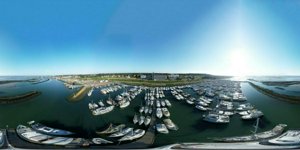
For me, the schedule was a little tighter than I would have liked: the night before, I had only just returned from another short trip, and already at 5 a.m. I had to catch a train from Berlin. But in the end, everything worked out, and at around 4 p.m. we and the boat were already ready to launch at the marina in Workum.
Our sailing trip was starting the next morning, so after mooring our boat, we drove to visit another one in a neighboring town and spent the evening in the pleasant company of old sea dogs and their female counterparts. 🐺🌊


Dima’s circular route offered two options: heading out onto the IJsselmeer first, or taking the canals first.
The weather forecast called for strong winds on the lake, so we decided not to take any chances and took the canals towards Sneek and Leeuwarden instead. The scenery along the way was beautiful, and the bridges let us through quite quickly.
We had no trouble mooring for the night on the outskirts of Leeuwarden.


The next morning, we continued along the canals, passing through bridges first to Dokkum and then to Lauwersoog.
The weather was pleasant but not too warm. Out on the sea, the wind was strong, just as the forecast had promised, while on the canals it was blissful, with idyllic pastoral scenes all around us.


Lauwersoog lies right on the Wadden Sea and is separated from it by a large lock.
In the morning, we joined the queue to pass through it. We were held up for a while by a huge barge that took up the entire lock as it was being raised. But overall, we got through quite quickly and sailed on towards the island of Schiermonnikoog. Thanks to our shallow draft, we could navigate the Wadden Sea fairly freely without having to worry about running aground on the sandbanks. Nevertheless, we had to hurry, as shortly after we moored at the marina, the tide began to go out and the water receded, exposing the muddy seabed.
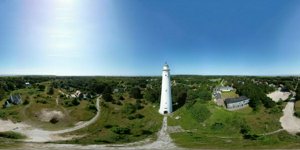
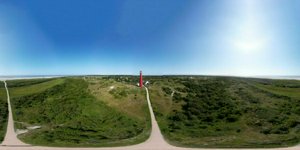
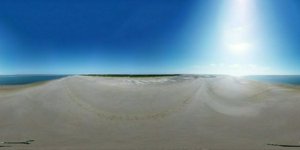
Schiermonnikoog is notable for two lighthouses within direct sight of each other - one red and one white - as well as a beautiful sandy beach. It was a pleasure to walk around the island in the afternoon.


The next morning, we set off along a winding channel towards the island of Ameland. We got there without any adventures and once again spent the second half of the day exploring the island on foot.
We passed through an ancient but still very much inhabited village, with houses dating back to the 17th century (the same age as Tomsk). We also stumbled upon an abandoned water park.
Ameland has just one lighthouse, but it is striped white and red. We didn’t walk all the way to it, as it was too far.
On the other side of the island, there is a pleasant sandy beach.


The next island on our itinerary was Terschelling.
The weather was changing, and it was getting hot. Ameland’s striped lighthouse remained on the horizon, while seals watched us from the sandbanks, and some of them even followed our boat.
Through trial and error, we discovered that it was better not to venture into water less than 90 cm deep, as the rudder could hit the bottom.
The lighthouse on Terschelling is rectangular and looks more like a wizard’s tower.
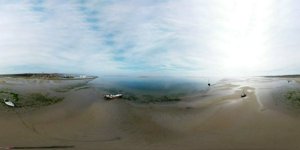
We walked around the island and made our way to the Wadden flats, where ships were resting. We had some local battered fish, kibbeling - very tasty.
In the evening, the menu featured cookies and milk, a colorful sunset, and a rainbow.


After Terschelling, we headed back to Workum to complete the circular route. It was a relatively long leg.
We sailed across the Wadden Sea to Den Oever, where we entered the IJsselmeer through a lock. After a short stop in Den Oever, we continued on and reached Workum by evening.
This marked the end of the sea-going part of our journey.


In the morning, we unloaded the boat and prepared it for transport, which took several hours.
After lunch, we were free and drove to Hindeloopen to meet up with some friends.
From there, I headed back to Berlin by train and bus.


The trip turned out to be full and varied, both in terms of the weather and the places we visited and the experiences we had.
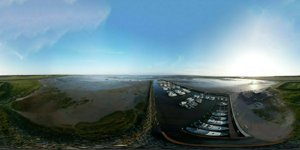
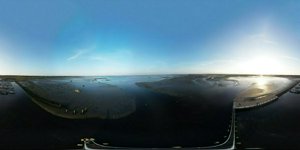
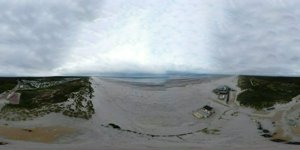
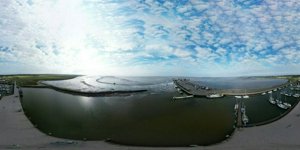
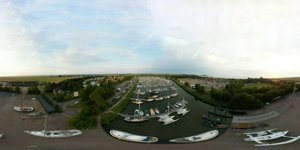
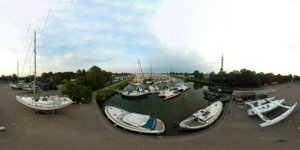
Panoramas